




How to Sue a Cruise Line: A Maritime Lawyer’s Guide to Filing Your Claim
Suing a cruise line is not like filing a typical personal injury claim, and the firm you choose makes all the difference. Maritime law, a federal one-year filing deadline buried in the fine print of your ticket, and a forum selection clause that often forces you to sue in Miami, Florida, which may be thousands of miles from home, all stand as hurdles injured cruise passengers must jump before obtaining a recovery of compensation for their injuries. Most personal injury attorneys are simply not equipped for this, as the deadlines are too short, the venue rules too rigid, the law very different from that applied to land-based cases, and the liability defenses too specialized.
Lipcon, Margulies & Winkleman, P.A. is the nation’s leader in maritime and admiralty law, handling cruise ship injury claims going back to our founding in 1971. Charles Lipcon and Jason R. Margulies have each been named “Lawyer of the Year” in Admiralty and Maritime Law by US News & World Report, and our firm has been recognized in “Best Law Firms”® by US News & World Report every year beginning in 2016. With 19 full-time attorneys across 7 offices, we have recovered over $500 million for our clients, and we know how to sue a cruise line because we have spent more than five decades doing it.
How to Sue a Cruise Line in Six Steps
The process is governed by general maritime law, federal statutes, and a passenger ticket contract drafted to protect the carrier, not you. The steps below are the same ones our cruise ship accident lawyers walk every injured passenger through during a free consultation.
Get Medical Attention and Document Everything
The first move is medical care, ideally onboard, so the visit becomes part of the ship’s records. Then start gathering evidence. Photograph the hazard. Get the names of any witnesses. Save your boarding pass, ticket, medical records, and any incident reports the crew prepares. Cruise lines begin building their defense the moment an injury occurs, and passengers who wait to document the scene almost always find the evidence gone.
Read the Passenger Ticket Contract
Buried in the terms and conditions of every ticket contract are the rules that will govern bringing and maintaining your case. The passenger ticket contract dictates where your lawsuit must be filed, how long you have to file, and what notice you must provide within a very short time period. The Supreme Court upheld these contracts in Carnival Cruise Lines, Inc. v. Shute, 499 U.S. 585 (1991), even though no passenger has ever negotiated the terms contained within the fine print of a cruise line’s passenger ticket contract. Most ticket contracts also prohibit cruise passengers from joining class action lawsuits, meaning each claim must be filed individually. Of course, there are certain laws that restrict the application and scope of some of these passenger ticket provisions.
Provide Written Notice Within the Contractual Deadline
Most ticket contracts require formal written notice of your claim within 180 to 185 days of the incident, in most circumstances. Federal law allows this restriction. Under 46 U.S.C. § 30526, a cruise line cannot shorten the notice period to less than six months in certain circumstances, but it can require notice in exactly that window. Miss it, and the cruise line will move to dismiss your case.
File the Lawsuit in the Correct Court
Cruise lines designate a specific venue, often the Miami federal court, which is the United States District Court for the Southern District of Florida in Miami-Dade County. File anywhere else, and your case is subject to dismissal regardless of how strong the facts are. We routinely receive calls from cruise passengers whose prior attorneys filed within the one-year window but in the wrong court, only to watch the case dismissed.
Serve the Cruise Line on Time
Many ticket contracts also require the cruise line to be served within 120 days of the lawsuit being filed. This is one of the most overlooked deadlines in cruise line litigation, and it sinks otherwise meritorious cases.
Hire a Cruise Ship Accident Attorney Early
Land-based personal injury attorneys are not equipped to handle cruise ship cases. Our firm has handled these claims going back to 1971 and offers free, confidential consultations at no obligation.
When You Can and Cannot Sue a Cruise Line
We evaluate whether the cruise line’s negligence caused your harm, and that distinction determines whether a case moves forward or gets dismissed. The threshold question is always whether the cruise line breached its duty of reasonable care. If your own conduct caused the injury, the cruise line will defeat the claim regardless of how serious the harm was.
When You Can Sue
Cruise passengers typically have a viable lawsuit when the cruise line fails to maintain safe conditions or warn of known hazards. Common scenarios we handle include:
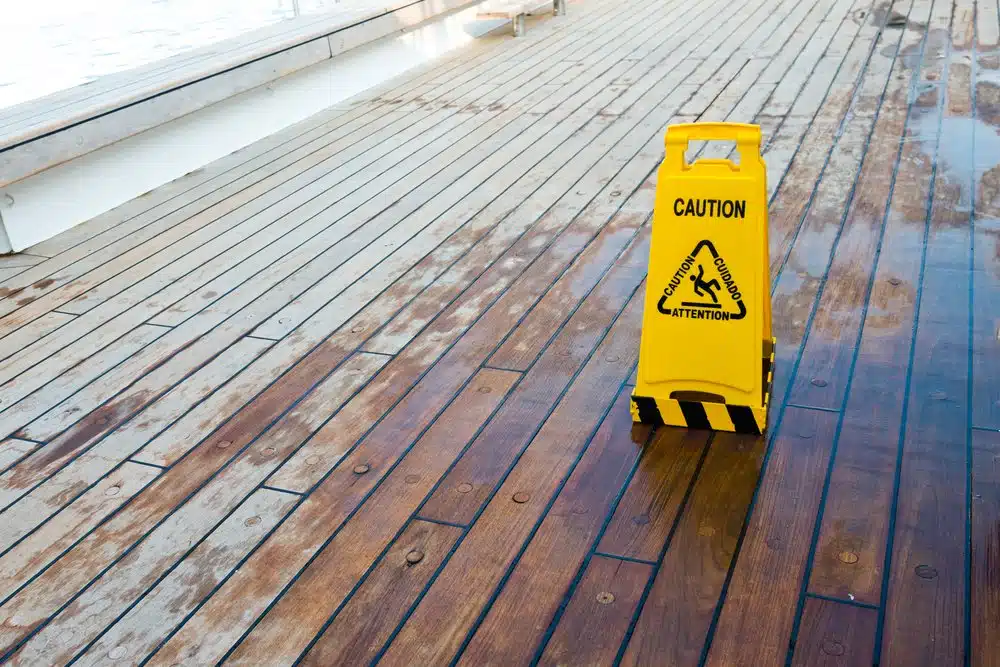
- Slip and fall accidents: Caused by torn carpeting, wet decks without warnings, or broken handrails
- Defective equipment: Malfunctioning elevators, broken automatic doors, or failed safety equipment
- Inadequate medical care: Failure to timely diagnose a condition, refusal to disembark a passenger to a closer port, or failure to airlift via helicopter
- Foodborne illness: Outbreaks caused by improper refrigeration or sanitation failures
- Crew assaults: Physical, sexual, or other intentional harm by employees
- Shore excursion injuries: When the cruise line was negligent in selecting the excursion operator or failed to warn of known risks
- Overboard incidents: Caused by inadequate railings, intoxicated passengers served past the point of obvious impairment, or crew negligence
Each of these situations requires a close review of the facts to determine whether the cruise line had prior knowledge and failed to act.
When You Cannot Sue
Cruise lines are not absolute insurers of passenger safety. Courts routinely dismiss claims when the passenger’s own conduct caused the harm, including injuries from voluntary intoxication, accidents in clearly marked restricted areas, and incidents where the passenger ignored crew instructions. Cases may also be dismissed when passengers fail to point out why the cruise line should have had notice of the injury-causing condition aboard their ship before the subject incident occurred.
The line between a winning case and a losing one often turns on subtle facts, and we evaluate those distinctions during the free consultation so you know exactly where you stand before taking legal action. Lawyers and law firms who do not specialize in cruise line litigation are unfamiliar with the pleading and evidentiary requirements of bringing and maintaining a case against a cruise line are often in peril, regardless of the size and successes that lawyer or law firm has had with other types of cases.
Common Cruise Ship Injuries and Negligence Claims
To establish a negligence claim, a passenger must prove four elements: duty of care, breach of duty, causation, and damages. Cruise lines owe passengers a duty of reasonable care under the circumstances, which includes maintaining safe conditions, training crew, and warning of known hazards. Negligence claims arise from a predictable pattern of onboard injuries that the largest cruise lines have failed to prevent despite decades of warning.
Slip and Fall Accidents
Fall accidents are the most common source of cruise ship injury claims. Wet decks near pools, polished marble floors, broken handrails, and torn carpeting all generate significant negligence claims when the cruise line knew or should have known about the hazard.
Medical Negligence
Medical negligence cases are complicated by a structural defense the largest cruise lines exploit aggressively: onboard medical staff are usually classified as independent contractors rather than cruise line employees. This complicates direct liability for medical malpractice, though vicarious liability theories can still succeed when the facts support them.
Shore Excursion Injuries
If an injury occurs during a shore excursion, the cruise line may still be held liable if it was negligent in selecting the excursion operator or failed to warn of known risks. Shore excursion claims are increasingly common in cruise line litigation, particularly involving zip-lining, snorkeling, and bus tour incidents.
Sexual Assault and Crew Misconduct
Cruise ship sexual assault remains a serious problem in the industry. Our cruise ship sexual assault lawyers handle these cases with the discretion and aggression they require.
Three Ways a Cruise Line Can Be Held Liable
Maritime law gives injured passengers three distinct legal theories, and selecting the right one, or combining them, often determines whether a case settles, succeeds at trial, or fails entirely.
Direct Negligence
A direct negligence claim targets the cruise line for its own corporate failures, including negligent hiring, retention, training, supervision, and method of operation. The passenger must prove the cruise line knew or should have known about the dangerous condition. This is the most common framework for slip and fall accidents, defective equipment claims, and inadequate medical care lawsuits.
Vicarious Negligence
When a crew member’s conduct causes the injury, cruise passengers can sue the cruise line under vicarious liability. The advantage is significant: the passenger does not need to prove the cruise line had advance notice of the hazard. If the crew member breached a duty of care, the cruise line is liable.
Strict Liability for Crew Sexual Assault
When a crew member sexually assaults a passenger, the cruise line is held strictly liable for the crew member’s actions. The only defenses available are that the assault never occurred or that the contact was consensual.
Where to Sue a Cruise Line: A Cruise-by-Cruise Filing Guide
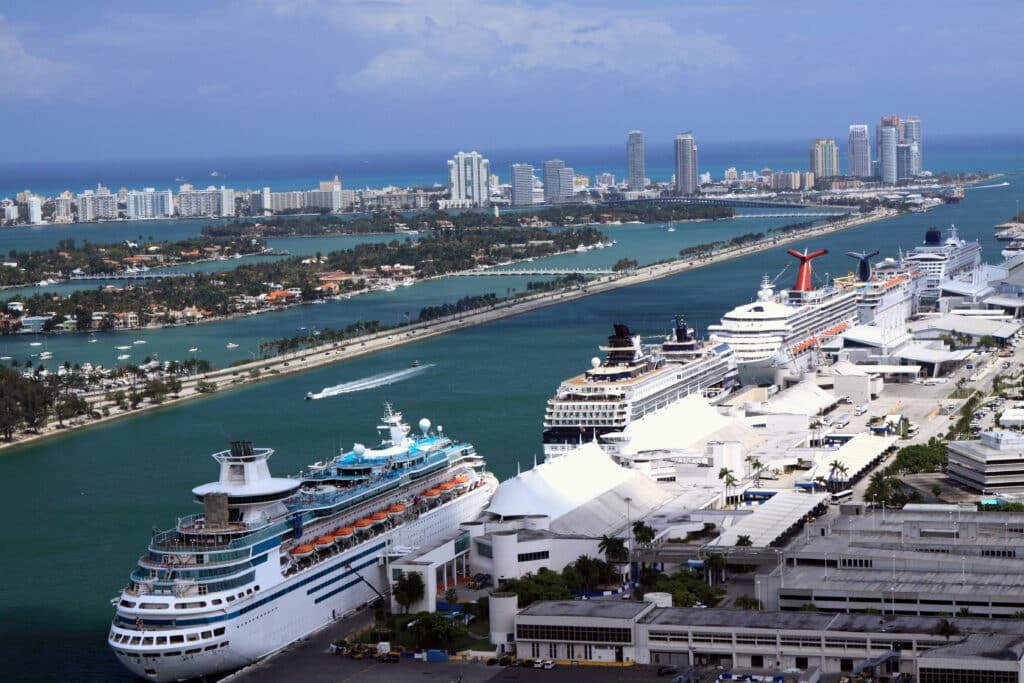
Where you sue depends entirely on the forum selection clause in your ticket contract. Most of the largest cruise lines headquartered in Miami require lawsuits in the Miami federal court. Others designate courts in Seattle, Los Angeles, Orlando, or even foreign cities like Genoa or Basel. Below is a breakdown by cruise line of where claims must be filed and what to know before you do; however, don’t rely on the following list — check your cruise ticket’s terms and conditions for up-to-date, accurate information.
- Carnival Cruise Lines. Lawsuits must be filed in the United States District Court for the Southern District of Florida in Miami-Dade County. Carnival requires written notice within 185 days, suit filed within one year, and the cruise line served within 120 days. Read more about Carnival Cruise Line claims.
- Royal Caribbean Cruises. Claims must be filed in the United States District Court for the Southern District of Florida in Miami-Dade County. The standard one-year statute of limitations applies. See our Royal Caribbean page.
- Norwegian Cruise Line. Lawsuits must be filed in the United States District Court for the Southern District of Florida in Miami-Dade County. Norwegian Cruise Line Holdings is one of the most heavily litigated cruise companies in the United States. See our Norwegian Cruise Line injury page.
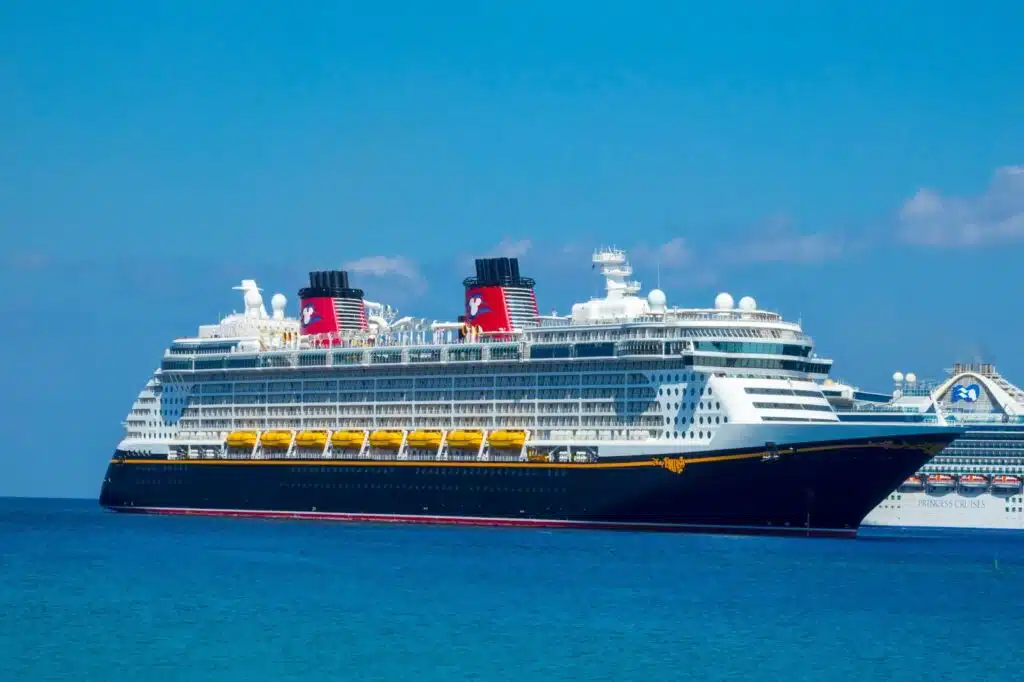
- Disney Cruise Line. Claims must be filed in the United States District Court for the Middle District of Florida, Orlando Division, in Brevard County. See our Disney Cruise Line litigation overview.
- Celebrity Cruise Lines. Suits must be filed in the United States District Court for the Southern District of Florida in Miami-Dade County. Celebrity Cruises is owned by Royal Caribbean Group but maintains its own ticket contract terms. Read more on our Celebrity Cruises page.
- Princess Cruises. Claims must be filed in the United States District Court for the Southern District of Florida in Miami, or in Miami-Dade County state court if federal jurisdiction does not apply. Princess Cruises is a Carnival subsidiary. See our Princess Cruises page.
- Holland America Line. Lawsuits must be filed in the United States District Court for the Western District of Washington at Seattle. See our Holland America page.
- Cunard Line. Claims must be filed in the United States District Court for the Central District of California in Los Angeles. Our Cunard Line litigation page covers our experience.
- Costa Crociere. Suits typically must be filed in the courts of Genoa, Italy, or against the parent company Carnival Corporation in the United States. See our Costa Cruises page.
- MSC Cruises USA. For cruises that include a U.S. port, lawsuits must be filed in the United States District Court for the Southern District of Florida in Fort Lauderdale. For voyages without a U.S. port, the courts of Naples, Italy, apply. See our MSC Cruises page.
- Silversea Cruises. Lawsuits must be filed in the United States District Court for the Southern District of Florida in Fort Lauderdale, Broward County. See our Silversea page.
- Other Lines. Our firm has also pursued claims against Crystal Cruises, Seabourn Cruise Line, Regent Seven Seas, Windstar Cruises, and others. View the full list of cruise companies our firm has sued.
The forum selection clause in your ticket contract controls where your case must be filed, with no exceptions. Filing in the wrong court is one of the most preventable ways a cruise claim is lost.
How Long Do You Have to Sue a Cruise Line?
The default statute of limitations for a maritime tort causing personal injury or death, under general maritime law, is three years. In practice, most cruise passengers do not get that long. Federal law permits cruise lines to shorten the filing window by ticket contract, for most personal injury claims, to as little as one year, and they all do. For most passengers, the cruise ticket deadline to file a lawsuit is typically one year from the date of the incident. Wrongful death claims under maritime law (or claims of minors or mental incompetents) generally allow up to three years, depending on the circumstances.
For minors and incompetent passengers, federal law extends the deadline up to three years, but the clock does not start running until a legal representative is appointed. This extension is particularly important in cruise ship sexual assault cases involving minors, where the time to take legal action may not have started running yet, even years after the incident. Most ticket contracts also require written notice within 180 to 185 days. A late notice is not always fatal, particularly when the cruise line had contemporaneous knowledge through onboard medical care or its own incident reports, but missing the notice deadline gives the cruise line ammunition no plaintiff wants to face.
How to Report and Complain About a Cruise Line
Reporting through the right channels protects your case and triggers federal investigations the cruise line cannot easily dispute. Suing the cruise line is one path to recovery. Reporting to government agencies is a separate, parallel step that should happen as early as possible.
Report Onboard Immediately
Notify the ship’s security officer and request a written incident report. Insist that the scene be secured if a crime occurred. Get a copy of the report before disembarking. Cruise lines are required to maintain a centralized logbook of all criminal complaints under the Cruise Vessel Security and Safety Act.
Report Crimes to the FBI and U.S. Coast Guard
Serious crimes against U.S. nationals on cruise ships, including homicide, sexual assault, kidnapping, and theft over $10,000, fall under FBI jurisdiction. The cruise line is also legally required to report these incidents.
Report Service Issues to the Federal Maritime Commission
The Federal Maritime Commission handles consumer disputes involving cancellations, refunds, and service problems for cruises that embark from U.S. ports. Their Office of Consumer Affairs and Dispute Resolution Services will contact the cruise line on your behalf.
Report Safety Issues to the U.S. Coast Guard
The U.S. Coast Guard regulates cruise ship safety standards and conducts onboard inspections. Safety violations and concerns can be reported directly to the Coast Guard.
Reporting through these channels does not replace a lawsuit. It creates an independent record the cruise line cannot easily dispute.
Damages You Can Recover in a Cruise Ship Lawsuit
A successful cruise ship lawsuit may recover both economic and non-economic damages. Our attorneys pursue every category of compensation maritime law allows, including:
- Medical expenses: Past and future treatment, surgery, rehabilitation, and onboard medical bills
- Lost wages: Income lost during recovery and reduced earning capacity for permanent injuries
- Pain and suffering: Physical pain, mental anguish, and loss of enjoyment of life
- Emotional distress: When the passenger was physically injured or in the zone of danger
- Property damage: Personal items destroyed in the incident
- Wrongful death damages: Loss of support, companionship, and funeral costs
The availability of each category depends on where the incident occurred and which federal statutes govern your claim. One important limitation: when a passenger dies in international waters, recovery is governed by the Death on the High Seas Act, which limits damages to strictly financial losses and excludes pain and suffering.
Put America’s Leading Cruise Ship Lawyers to Work for You: Lipcon, Margulies & Winkleman, P.A.
If you or a family member was injured on a cruise ship, you have a narrow window to act, and the cruise line is already working to protect itself. Lipcon, Margulies & Winkleman, P.A. has spent more than 50 years holding the largest cruise lines accountable, including Carnival, Royal Caribbean, Norwegian, Disney, Celebrity Cruises, Princess Cruises, Holland America, MSC, and many more. Our firm has been recognized in “Best Law Firms”® by US News & World Report every year beginning in 2016, and Charles Lipcon and Jason R. Margulies have each individually been named “Lawyer of the Year” in Admiralty and Maritime Law by US News & World Report. With 19 full-time attorneys across 7 offices and over $500 million recovered, we have the resources and trial experience to take on any defendant in any forum.
Our consultations are free, confidential, and carry no obligation. Whether your incident happened on a Caribbean cruise, an Alaskan voyage, a Mediterranean itinerary, or a cruise that never touched a U.S. port, we can evaluate your case and tell you exactly what your options are. Call 877-233-1238 or submit your information for a free case evaluation to get started today.

Published on February 8, 2024
Categories: Cruise Ship
Get Free
Consultation